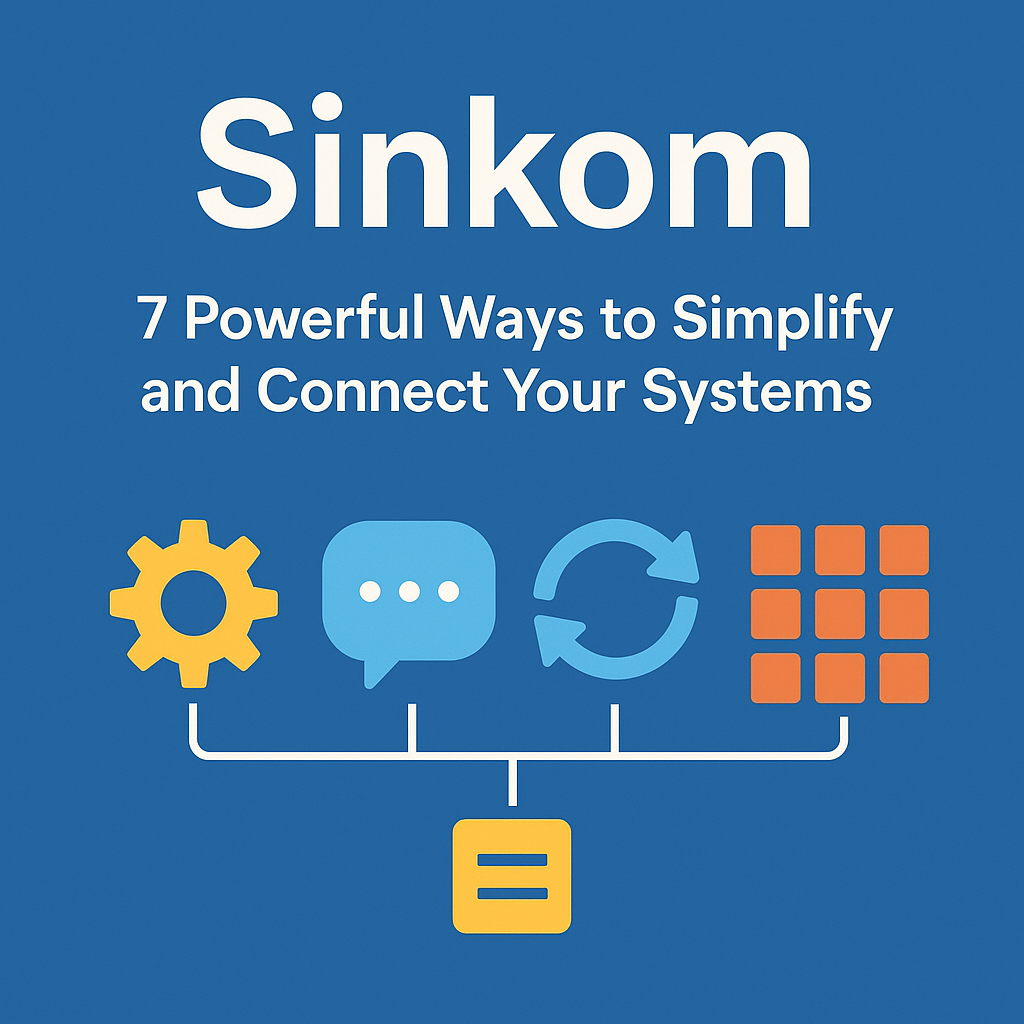
Sinkom: A Simple Way to Connect Systems and People
Today every business and person uses many tools and systems, sometimes these tools do not work well together, data gets lost and teams repeat work, this is a big problem for growth and communication, Sinkom is a new idea that solves this problem, the word Sinkom stands for three simple parts, they are Synchronization, Communication, and Modularity, these three ideas work together to make systems simple and smart Twizchat com
Sinkom helps people and tools stay in sync, it helps them talk to each other, it also lets them grow and change without breaking, this makes work faster easier and more flexible
What is Sinkom
Sinkom is a way to design systems that can work together, it is not one tool or software, it is a method that uses three steps
Sync
Communicate
Build in parts or modules
The goal of Sinkom
Keep all data updated everywhere
Make it easy to send and receive information
Build systems in small replaceable parts
Save time and avoid confusion
Make work more organized and simple
The Three Parts of Sinkom
Synchronization
Synchronization means everything stays updated together, when one part changes all other parts also change, this keeps data correct and saves time
Example uses of synchronization
When a person updates a contact list on one app it changes on all apps
When a product sells the stock count updates on all systems
When a file changes everyone sees the new version
Main ideas in synchronization
Real time updates
Safe and clean data
Shared state between systems
Fast and correct actions
Communication
Communication means every system or person can share information clearly, good communication removes delays and mistakes, it helps people and tools make the right decisions faster
How Sinkom uses communication
Tools talk through simple messages or APIs
Events are sent when something changes
Every message is clear and has a purpose
Teams get feedback quickly
Benefits of good communication
Faster problem solving
Clear updates
Less confusion
Strong teamwork
Modularity
Modularity means building systems in small parts, each part does one job and can work alone or together with others, if one part breaks the others can keep working
Simple example
A car has an engine wheels and lights, you can change one part without changing the whole car, this is the same in Sinkom systems.
Benefits of modularity
Easy to add new parts
Simple to fix problems
Each part is small and easy to understand
The system grows without slowing down
Why Sinkom is Important
Sinkom helps teams work better and smarter, it is useful for any business or person who uses many systems
Main benefits of Sinkom
Speed Work gets done faster because data moves in real time
Accuracy Less errors because everything is synced
Flexibility You can change or replace parts easily
Safety Each part is secure and separate
Growth The system can expand without big changes
How Sinkom Works
Sinkom works in layers, each layer has its own job, together they create one smooth system
| Layer | Role | Examples |
|---|---|---|
| Edge Layer | Collects information from users or devices | Sensors or mobile apps |
| Service Layer | Runs main tasks and logic | Payment or login systems |
| Communication Layer | Sends messages and data | API or message bus |
| Data Layer | Stores and shares information | Databases or files |
| Control Layer | Keeps everything safe | Access control and logs |
| Monitor Layer | Checks health of system | Dashboards and alerts |
Each layer must be simple, each one connects to others through clear paths, this makes the system stable and easy to manage
Common Uses of Sinkom
Sinkom can be used in many ways, here are some simple examples
Business Systems
Different apps like billing HR and CRM can talk to each other, when a sale happens all systems update at once
Smart Devices
Smart home devices like lights and locks sync together, when you open the door the light turns on
Healthcare
Hospitals use Sinkom to keep patient data updated across departments, doctors nurses and labs always see the same information
Education
Schools use modules for attendance lessons and grading, each system talks to the other in real time
City Services
Traffic systems buses and sensors all share data, this helps control traffic and save energy
Steps to Build Sinkom
The best way to use Sinkom is step by step, do not build everything at once
| Step | Goal | What to do |
|---|---|---|
| Find problems | See where data or systems are not connected | Make a list of all tools and issues |
| Start small | Test with one small system | Sync one process or team |
| Grow slowly | Add more systems | Use one rule for communication |
| Watch results | Track errors and time saved | Use logs and dashboards |
| Improve often | Keep modules healthy | Review every few months |
This plan helps you start fast and grow safely
How to Run Sinkom Every Day
Running a Sinkom system needs teamwork and care
Main roles
Platform Team keeps the main setup and tools working
Module Teams manage their own part
Security Team protects data and users
Operations Team watches performance and fixes issues
Daily best practices
Check data sync daily
Keep logs clean and simple
Update modules one by one
Review security and access often
Train people to use systems correctly
Security in Sinkom
Security is very important in a connected system, Sinkom keeps security strong at every step
Ways to stay safe
Use passwords and identity checks
Protect data when it is saved or sent
Keep private parts of the system hidden
Record all changes and access
Always test before you go live
Common security rules
GDPR for personal data
ISO 27001 for safe management
SOC 2 for service quality
Security must be part of every module not just one
Monitoring Sinkom Systems
You must always know if the system is healthy, monitoring helps find problems early
Things to track
Time to sync data
Number of failed messages
Module uptime
Storage use
Cost and performance
Useful tools
Dashboards to see live data
Logs to review events
Alerts to warn about errors
When you track these things you can fix small issues before they grow big
Problems You May Face
No system is perfect, Sinkom also has some challenges
Main challenges
Connecting old systems can be hard
Many APIs need extra setup
Security gets more complex
Cost may grow at first
Teams may need new training
Simple solutions
Use one data format
Create clear rules for every module
Use automation for testing and updates
Train teams step by step
Start small and scale later
These steps make Sinkom easier to handle
Future of Sinkom
The idea of Sinkom will grow with new technology
New trends
AI Sync that can guess and fix problems automatically
Smart Edge systems that work locally and sync later
Blockchain for trusted data sharing
Self healing modules that restart when they fail
Shared networks between companies that follow one standard
The future of Sinkom is about smarter and faster systems that do not depend on one place or one person
How to Start Using Sinkom
You can start with small actions today
Simple plan
Make a list of all tools you use
Find where data repeats or goes missing
Pick one workflow to sync
Set one clear rule for communication
Divide the workflow into small modules
Measure time saved and errors fixed
Keep improving each month
Start with one process, once it works you can grow to the next
Sinkom in Daily Life
Sinkom is not only for big businesses, it can help anyone stay organized
Examples
Sync your phone calendar with your computer
Connect your email and task app so tasks update automatically
Use one system to store files and share them
Automate reminders between your tools
Link home devices so they work together
Sinkom thinking can make daily work smoother and simpler
Best Tips for Success
Follow these tips to keep Sinkom strong and simple
Use clear names for all modules
Write easy to read documentation
Test every part before launch
Watch for slow sync or failed messages
Keep systems small and focused
Update often and remove unused parts
Review data quality every week
Share updates with the whole team
These habits keep systems clean and easy to manage.
Table of Sinkom Benefits
| Area | How Sinkom Helps |
|---|---|
| Speed | Real time sync saves time |
| Accuracy | One version of truth across all systems |
| Flexibility | Easy to add or remove modules |
| Safety | Separate modules lower risk |
| Growth | Systems scale naturally |
| Clarity | Clear communication keeps teams aligned |
This table shows how Sinkom makes both systems and teams better
Frequently Asked Questions
What is Sinkom?
It is a simple system that joins three main ideas, these are synchronization communication and modularity, it helps tools and people work together in real time and keeps data clean and updated
How does Sinkom work?
It works by keeping all systems connected, it sends updates across tools through clear communication paths and uses small modules that can change or grow easily
Why is it important for business?
It helps a business work faster and smarter, it removes extra work improves teamwork and keeps every part of the company updated at the same time
What are the three parts of Sinkom?
The three parts of Sinkom are
Synchronization which keeps all data the same everywhere
Communication which allows systems to share messages
Modularity which builds systems in small and easy parts
How can I start using Sinkom?
Start with one small workflow, sync your data across two tools add clear communication between them and then build small modules for each task, grow step by step
Is Sinkom safe?
Yes it can be safe when each module uses strong passwords access control and data protection, every part must follow the same security rules
Can small teams use this?
Yes even small teams can use Sinkom, it helps them connect tools reduce confusion and work faster without needing expensive systems
What are the benefits of using this?
Main benefits include faster work fewer errors stronger teamwork better security and easy system growth
Can this work with old systems?
Yes but it may need connectors or small updates, it can link old and new systems if both follow simple sync and communication rules
What is the future of this?
The future of this includes smart automation AI based sync and stronger security, it will make digital systems faster and more independent
Conclusion
It is a simple yet powerful idea, it helps everything work together in one flow, by using Synchronization Communication and Modularity any system can become faster safer and easier to grow, you do not need to change everything at once, start small learn from results and expand step by step, keep your systems in sync keep your teams talking and keep your design modular